



Interested in our services
Contact our experts to provide further information




Spatial proteomics is reshaping life science research with unprecedented precision. Recognized as a 2024 Technology of the Year by Nature Methods, this technology overcomes the limitations of traditional bulk proteomics analysis by enabling precise protein quantification while preserving spatial information within tissue architecture.
However, current spatial proteomics technologies often face a key bottleneck: regions can be visualized, but detection depth remains limited. Spatial resolution, proteome coverage, and post-translational modification site identification are still difficult to achieve simultaneously, creating a major challenge for clinical translation.
As a pioneer and leader in spatial proteomics, PTM BIO continues to drive technological innovation through its proprietary Proteomics platform, LCM-based laser capture microdissection, and AI-powered analysis technologies.
PTM BIO has now launched Spatial X Topographic Proteomics / Phosphoproteomics, enabling true whole-tissue visualization of protein expression. This platform achieves major technological breakthroughs, including centimeter-scale spatial coverage, micrometer-level precise microdissection, and exclusive PTM-level decoding.
By mapping a panoramic landscape of protein modifications that drive drug resistance, recurrence, and disease progression, Spatial X provides a comprehensive spatial proteomics solution for precision medicine research.
1. High-Depth Tissue Proteome Detection: the platform enables deep tissue proteome profiling, with 7,000+ proteins identified in total and an average of 5,200+ proteins detected per sample.
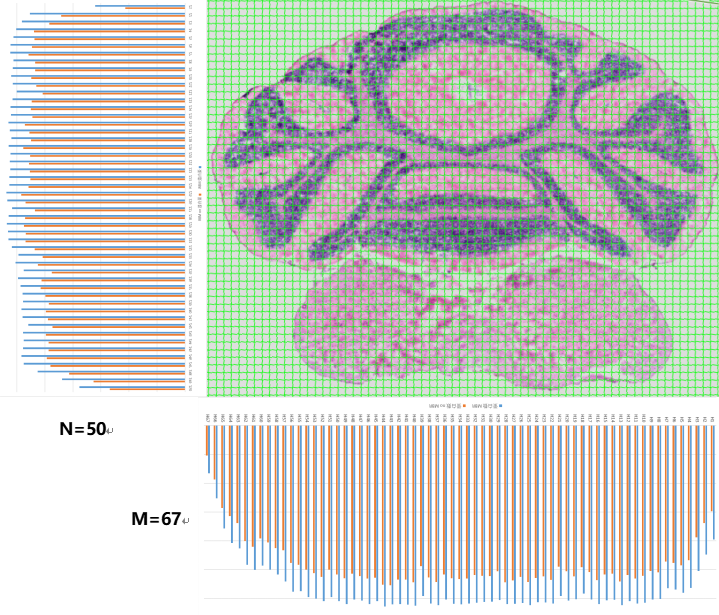
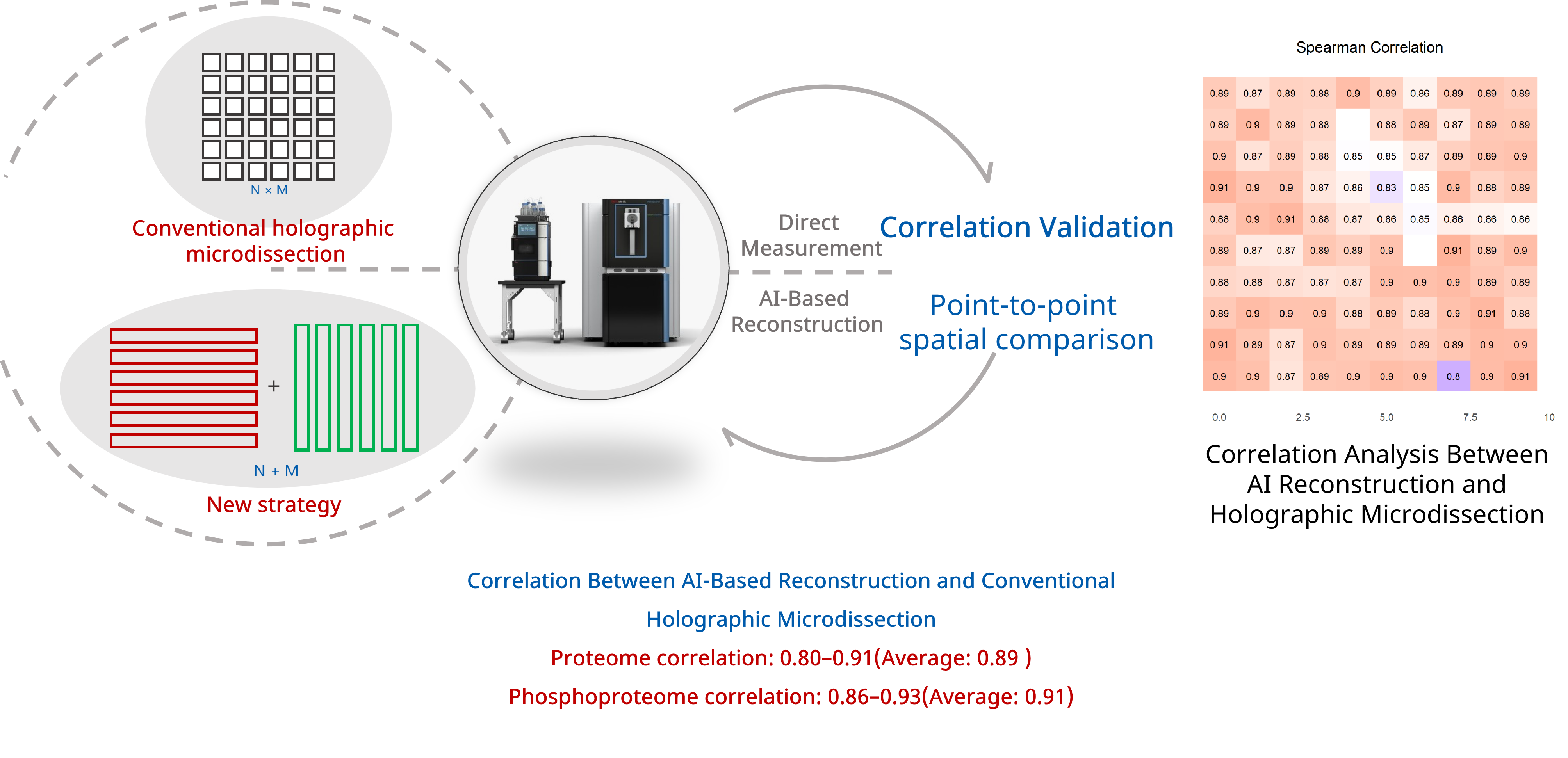
2.Accuracy Validation of AI-Based Image Reconstruction:correlation with conventional holographic spatial datasets reaches up to 0.91
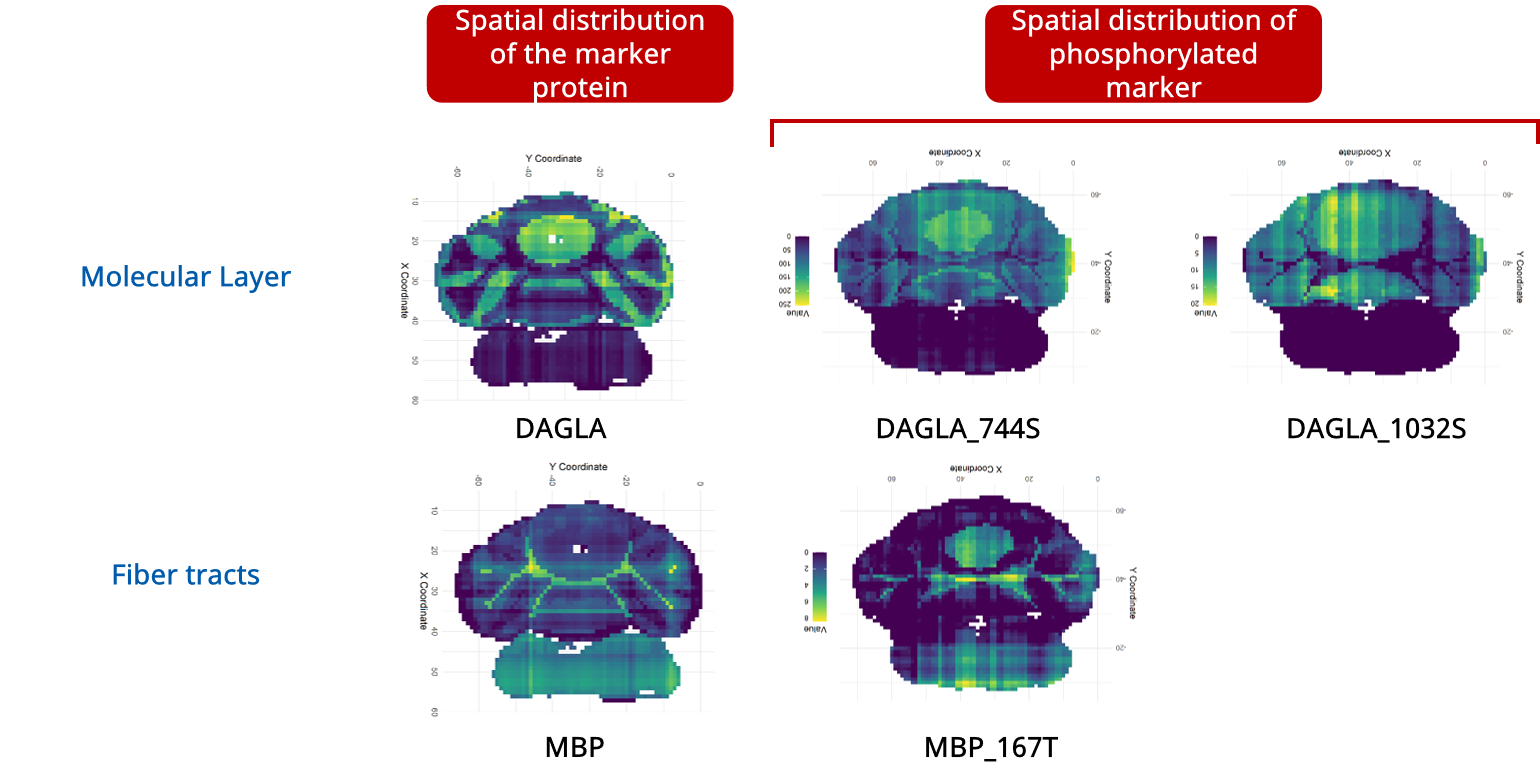
3. Spatial Distribution Mapping of Key Molecular Markers
1. Deep Spatial Profiling of the Tumor Microenvironment
With its core advantages of centimeter-scale spatial coverage and micrometer-level microdissection, Spatial X is highly suited to the key needs of tumor research. It supports studies focused on tumor heterogeneity, drug resistance mechanisms, recurrence prediction, and related research areas.
By precisely capturing protein expression differences across distinct tumor regions, Spatial X enables the construction of a panoramic spatial map of the tumor microenvironment.
2. Spatially Resolving Cardiovascular Disease Mechanisms
Spatial X can directly reveal proteomic differences across internal regions of arterial plaques, myocardial lesions, and other cardiovascular pathological tissues.
It enables in situ mapping of communication networks and spatial relationships among cardiomyocytes, immune cells, fibroblasts, and other cell types, linking specific molecular abnormalities to defined pathological phenotypes within the native tissue context. This provides spatial evidence for disease mechanism studies and therapeutic target discovery.
3. Innovative Insights into Neurological Disorders
For neurological disease research, Spatial X provides spatially resolved protein maps of function-specific brain regions, supports the discovery of early spatial biomarkers for neurodegenerative changes, and helps decode spatial protein regulation associated with the blood–brain barrier.
Spatial X Holographic Proteomics presents comprehensive protein-level regulatory information across brain tissue in a single spatial map, serving as a powerful tool for neurological disease research.
4. Comprehensive Analysis of Reproductive Development
The origin of life is governed by highly precise spatial regulatory programs. Spatial X Holographic Proteomics / PTMomics directly reveals the spatial distribution of proteins and post-translational modifications within tissues.
It enables localization of key regions such as signaling centers and genital ridges, and spatially links abnormal protein expression patterns with specific morphological defects. This helps identify the molecular origins of developmental disorders and reproductive diseases.
5. Core Value in Species Atlas Construction
Comprehensive species atlas analysis helps reveal dynamic changes and biological differences across life processes.
The size of tissue and organ regions across multiple species is well matched to the standard sampling format of Spatial X Holographic Proteomics. With micrometer-level spatial resolution and deep coverage of thousands of proteins and phosphosites, Spatial X enables systematic characterization of protein composition and pathway activation states across species.
Interested in our services
Contact our experts to provide further information